Medical Imaging Trends 2026: AI, Portability & Tele-Radiology
Introduction
In the dynamic landscape of modern healthcare, diagnostic imaging remains a pivotal tool for accurate clinical decision-making. As we navigate the radiology technology trends shaping 2026, selecting the right imaging infrastructure is no longer just a procurement task—it is a strategic investment in patient outcomes, departmental throughput, and long-term operational efficiency.
About 2026 Radiology Technology Trends
AI Integration, Point-of-Care Portability, and Teleradiology
This overview encompasses the critical advancements in diagnostic imaging that every healthcare procurement leader must evaluate to future-proof their departments and maximize return on investment (ROI).
🚀 Key Radiology Technology Trends for 2026
The diagnostic imaging sector is evolving rapidly. Procurement managers should prioritize systems that leverage the following innovations:
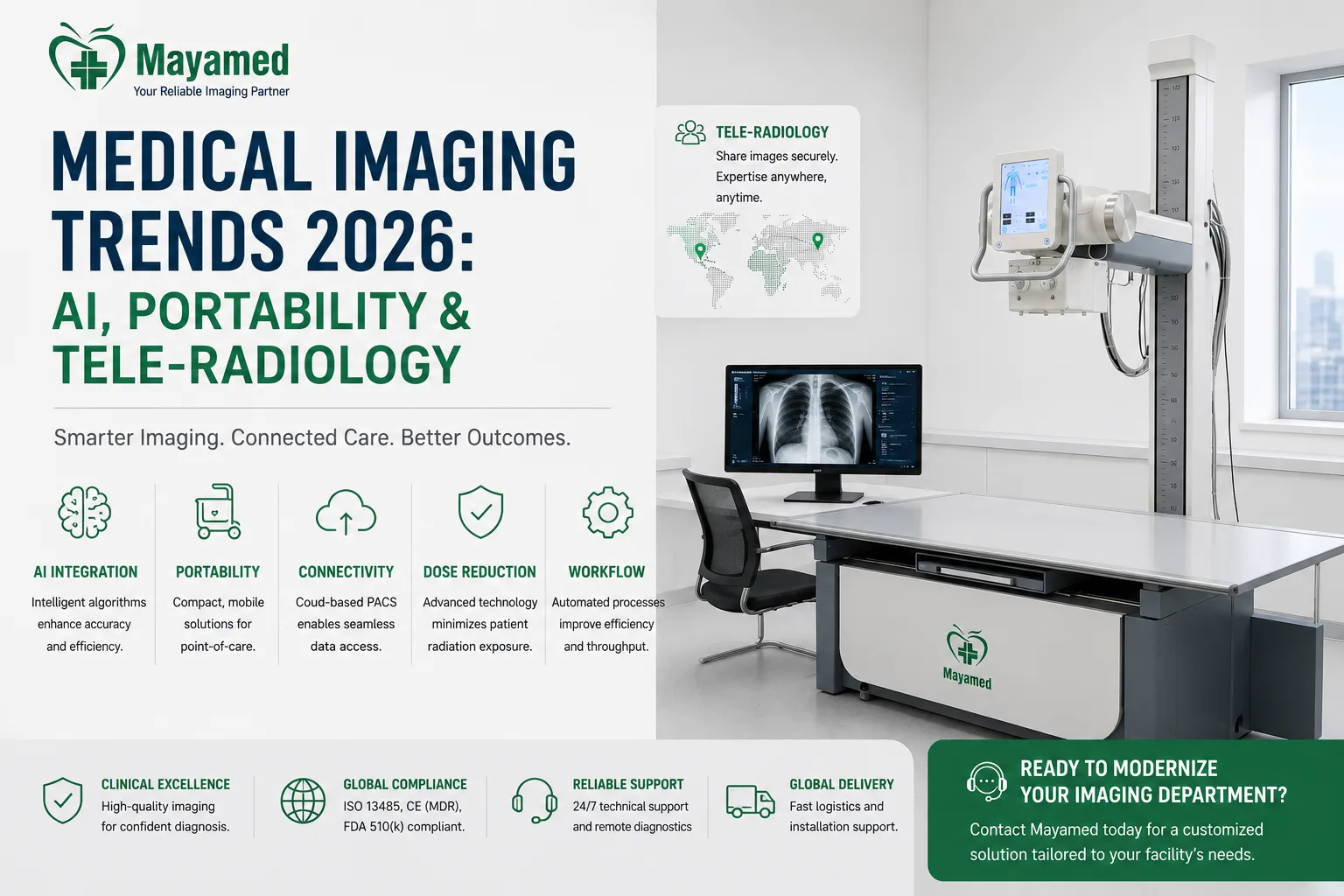
- AI-Driven Diagnostics: Deep learning algorithms integrated directly into the workflow to enhance image reconstruction, automate triage, and reduce reading times.
- Point-of-Care Portability: Battery-operated, lightweight modalities expanding decentralized care and bedside imaging capabilities.
- Seamless Connectivity: Cloud-native architectures and deep PACS integration enabling robust teleradiology and remote reporting workflows.
- Dose Optimization: Advanced iterative reconstruction protocols that significantly minimize patient radiation exposure without compromising diagnostic image quality.
- Workflow Automation: Smart, AI-assisted patient positioning and automated protocol selection to improve scan consistency and departmental throughput.
✅ Operational Best Practices
- Continuous Clinical Education: Ensure technologists and radiologists are continuously trained on the latest AI-assisted techniques and dose-reduction protocols.
- Preventive Maintenance (PM): Establish rigorous, vendor-backed PM schedules to minimize equipment downtime and extend the overall lifecycle of your assets.
- Comprehensive Quality Assurance: Implement strict daily, monthly, and annual QA testing in compliance with ACR or local regulatory standards.
- Active Dose Monitoring: Utilize dose-tracking software to continuously audit and optimize exposure levels across all modalities.
- Workflow Optimization: Leverage middleware and automation to streamline patient throughput and reduce diagnostic turnaround times.
⚠️ Procurement Challenges & Strategic Solutions
Capital Expenditure (CapEx) Limitations
Solution: Evaluate certified pre-owned (refurbished) systems, flexible leasing models, or phased hardware upgrades to optimize cash flow and manage budgets effectively.
Footprint and Space Constraints
Solution: Specify compact, high-density system designs or deploy mobile imaging units to maximize existing square footage without requiring structural renovations.
Change Management and Staff Adoption
Solution: Partner with OEMs that provide comprehensive, on-site clinical application training and super-user certification programs to ensure smooth technology adoption.
Risk of Technological Obsolescence
Solution: Invest in platforms with modular, upgradeable architectures and software-defined imaging capabilities to protect long-term capital investments.
🔬 Technical Excellence & Regulatory Compliance
Procuring equipment with advanced technical specifications is critical for ensuring diagnostic precision and clinical reliability. All recommended systems strictly comply with global regulatory standards, including ISO 13485, CE (MDR), and FDA 510(k) clearances where applicable.
🌍 Engineered for Global Deployment & Environmental Resilience
Designed with global adaptability in mind, our imaging solutions feature robust specifications to ensure uninterrupted operation in diverse environments:
- Power Grid Resilience: Wide voltage input tolerance (110V-240V) integrated with advanced surge protection to safeguard against unstable local power grids.
- Thermal Management: Enhanced, heavy-duty cooling systems engineered for optimal performance in high-ambient temperature environments (up to 45°C).
- Environmental Sealing: IP-rated internal components and reinforced chassis to ensure longevity and reliability in high-dust and high-humidity conditions.
Conclusion
Aligning your capital equipment strategy with the latest radiology technology trends is essential for delivering superior patient care and maintaining a competitive edge. By carefully balancing advanced technical requirements with total cost of ownership (TCO) considerations, procurement leaders can secure imaging solutions that drive clinical excellence and sustainable facility growth.
🚀 Ready to Modernize Your Imaging Department?
Backed by over a decade of global export expertise and a successful footprint in 50+ countries, Mayamed delivers high-performance diagnostic imaging solutions engineered for optimal total cost of ownership.
- ✅ Complimentary technical consultation & departmental site planning
- ✅ Comprehensive warranty coverage & tier-3 remote technical support
- ✅ Expedited global logistics & turnkey installation guidance
Contact our procurement specialists today for a customized, no-obligation quote.