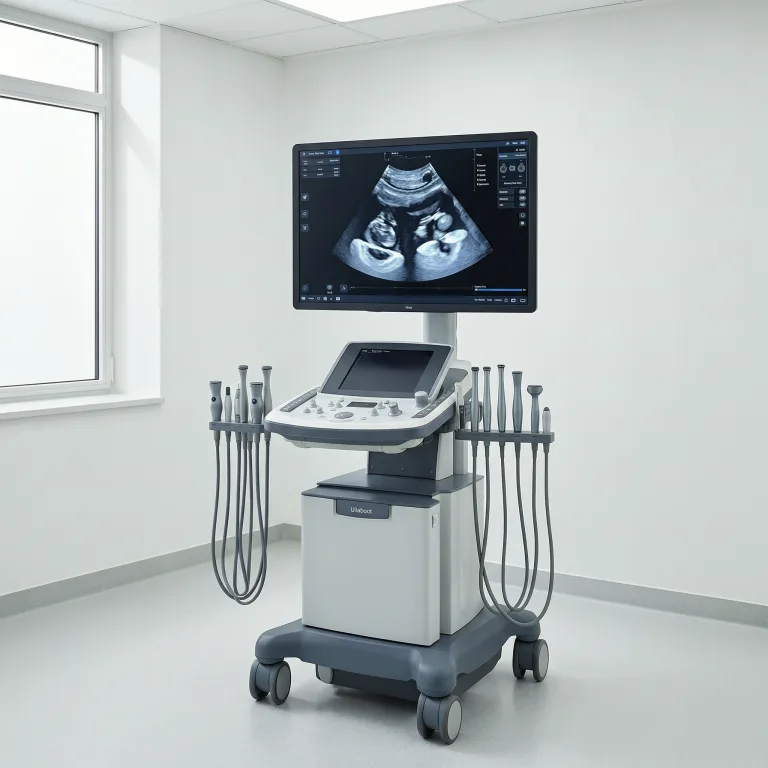
Cardiovascular disease remains the leading cause of mortality worldwide, driving an unprecedented demand for non-invasive, high-resolution diagnostic tools. A modern cardiac ct scanner has evolved from a supplementary imaging modality to a frontline diagnostic workhorse, enabling rapid coronary artery assessment, plaque characterization, and pre-procedural planning. For procurement directors and radiology administrators, selecting the right system requires balancing clinical performance, regulatory compliance, and site-specific infrastructure realities. This guide breaks down the essential parameters, operational best practices, and deployment considerations needed to future-proof your cardiac imaging equipment investments.
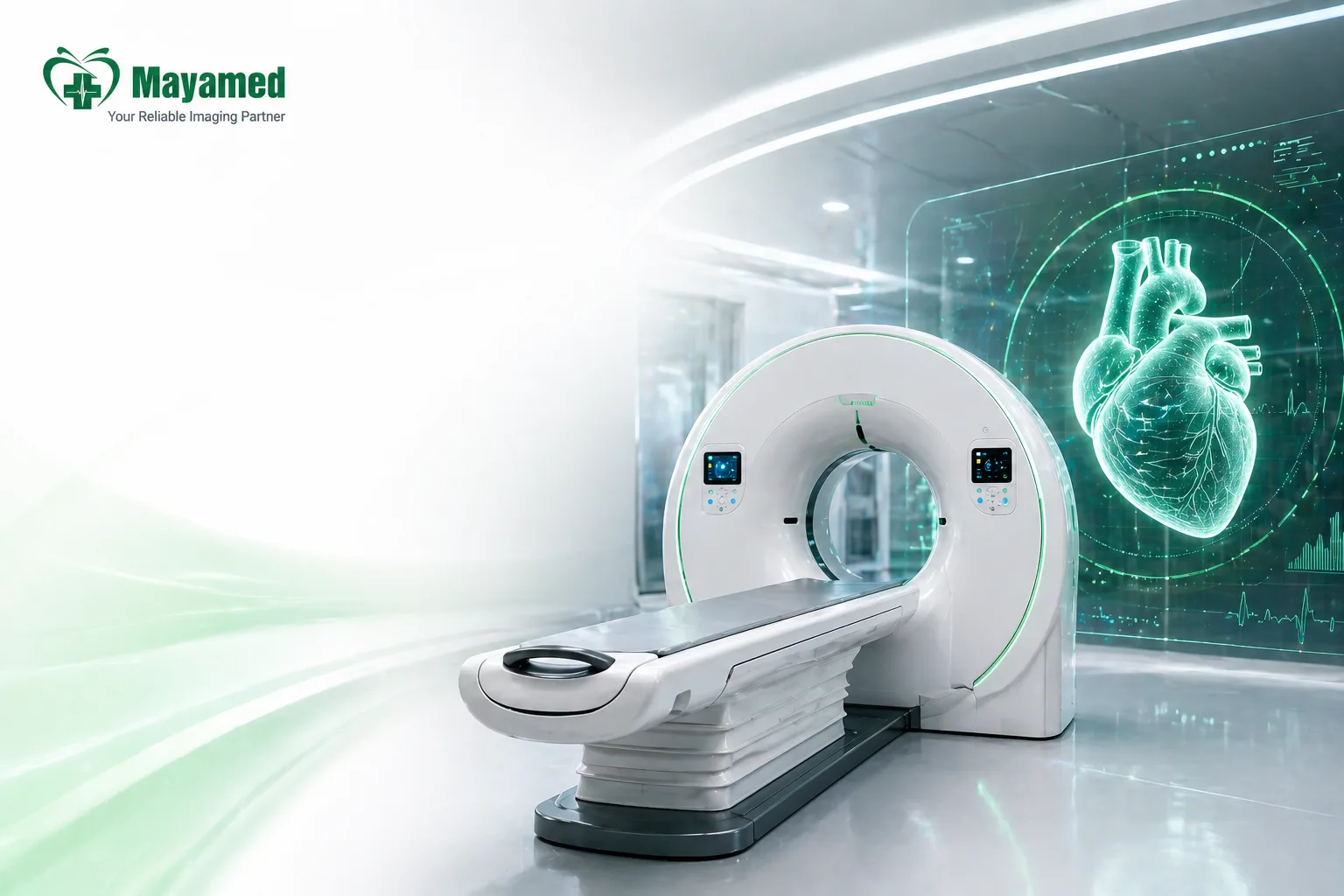
Core Technical Capabilities & Clinical Performance
Not all heart ct machine configurations deliver the same diagnostic confidence. When evaluating systems for coronary CT angiography (CCTA), focus on temporal resolution, reconstruction algorithms, and dose management rather than slice count alone.
Imaging Parameters & Dose Optimization
- Temporal Resolution: ≤75 ms enables clear visualization of coronary anatomy at heart rates up to 90 bpm, reducing reliance on beta-blocker premedication.
- Gantry Rotation Speed: Sub-0.30s rotation paired with dual-source or wide-detector coverage minimizes motion artifacts in high-heart-rate patients.
- Spatial Resolution & DQE: Isotropic resolution ≤0.35 mm combined with a high Detective Quantum Efficiency (DQE >65%) ensures sub-millimeter plaque differentiation and stent patency evaluation.
- Low-Dose Protocols: Automatic kVp modulation (70–140 kVp), ECG-gated tube current switching, and iterative AI-based reconstruction can reduce effective radiation doses to <1.0 mSv while maintaining diagnostic image quality.
Regulatory Compliance & System Interoperability
Procurement teams must verify that all equipment meets stringent international quality and safety benchmarks. Reputable manufacturers design systems under an ISO 13485:2016 certified Quality Management System and maintain active CE MDR certification for European markets and FDA 510(k) clearance for North America. Seamless integration with hospital IT ecosystems is equally critical: ensure full DICOM 3.0 compliance, HL7/FHIR support, and vendor-neutral PACS connectivity to streamline radiologist workflows and remote reporting.Infrastructure Adaptation for Emerging Markets
Deploying advanced imaging technology in regions across Africa, Latin America, and the Middle East requires hardware engineered for environmental and electrical variability. Standard clinical specifications often assume stable utility conditions; a globally optimized cardiac ct scanner must account for real-world infrastructure constraints.
Power Conditioning & Voltage Tolerance
Unstable grids demand robust power management. Systems deployed in emerging markets should feature:- Wide input voltage tolerance (100–240 VAC, ±20%) with 50/60 Hz auto-switching
- Integrated line conditioning and surge suppression (≥40 kA) to protect sensitive detector arrays and gantry motors
- Optional UPS integration for graceful shutdown during prolonged outages
Climate Resilience & Environmental Sealing
High ambient temperatures, humidity, and airborne particulates can accelerate component degradation. Look for:- Tropicalized Cooling Systems: Closed-loop chiller designs rated for continuous operation at 45°C (113°F) without derating tube performance
- Dust & Humidity Protection: IP54-rated operator consoles, HEPA-filtered gantry ventilation, and conformal-coated PCBs to prevent corrosion and short-circuiting in coastal or arid environments
- Anti-Vibration Mounting: Reinforced floor coupling kits for facilities lacking seismic or structural damping
Maximizing ROI: Operational Best Practices & Procurement Strategies
A heart ct machine represents a significant capital investment. Protecting that investment requires proactive operational planning and vendor alignment.
Staff Competency & Quality Assurance
- Implement tiered training programs covering ECG-gating protocols, contrast injection optimization, and post-processing workstation navigation.
- Establish routine QA schedules: daily calibration checks, monthly phantom-based uniformity tests, and annual third-party radiation dosimetry verification.
- Utilize built-in dose-tracking software to monitor cumulative patient exposure and maintain compliance with ICRP and local regulatory limits.
Workflow & Space Optimization
- Prioritize compact gantry designs (<1.5 m footprint) for retrofit installations in legacy radiology suites.
- Leverage automated patient positioning and AI-assisted protocol selection to reduce scan-to-scan variability and improve daily throughput by 15–20%.
- Choose modular platforms that allow detector or software upgrades without full system replacement, mitigating technology obsolescence.
Overcoming Common Implementation Challenges
| Challenge | Strategic Solution | |-----------|-------------------| | Capital Budget Constraints | Explore certified refurbished units, flexible leasing structures, or phased financing aligned with reimbursement cycles. | | Limited Clinical Space | Opt for slim-profile gantries with ceiling-mounted patient monitors and integrated contrast injectors. | | Specialized Training Gaps | Partner with manufacturers offering on-site clinical applications training and 24/7 remote engineering support. | | Rapid Tech Depreciation | Select open-architecture systems with cloud-upgradable reconstruction algorithms and modular tube/detector replacements. |
Conclusion
Selecting the right cardiac ct scanner extends beyond clinical specifications; it requires a holistic evaluation of site readiness, regulatory compliance, and long-term serviceability. By aligning technical performance with infrastructure realities and vendor support capabilities, healthcare facilities can deploy a reliable cardiac imaging equipment platform that enhances diagnostic confidence, improves patient throughput, and delivers measurable clinical ROI.
🚀 Ready to Upgrade Your Cardiovascular Imaging Department?
With 10+ years of specialized export experience and a proven footprint in 50+ countries, Mayamed engineers and deploys high-performance cardiac CT solutions tailored to regional clinical and infrastructure needs. Our global procurement team ensures seamless compliance, transparent pricing, and end-to-end deployment support.
✅ Free site feasibility assessment & power/load planning ✅ Factory-certified clinical training & 24/7 remote diagnostics ✅ Competitive pricing with flexible financing & global logistics coordination
📩 [Request a Customized Quote & Technical Datasheet](#) 🌐 [Contact Our Imaging Equipment Specialists](#)