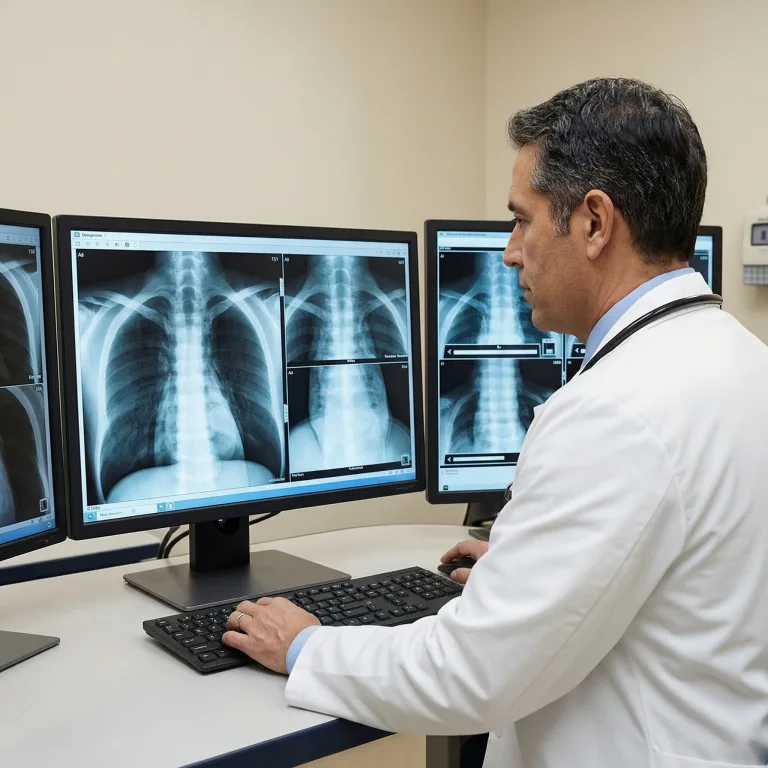
Handheld Ultrasound Meets AI: The Future of Portable Diagnostics
Article Summary
The convergence of miniaturized hardware and advanced machine learning is fundamentally restructuring the economics and clinical utility of point-of-care...
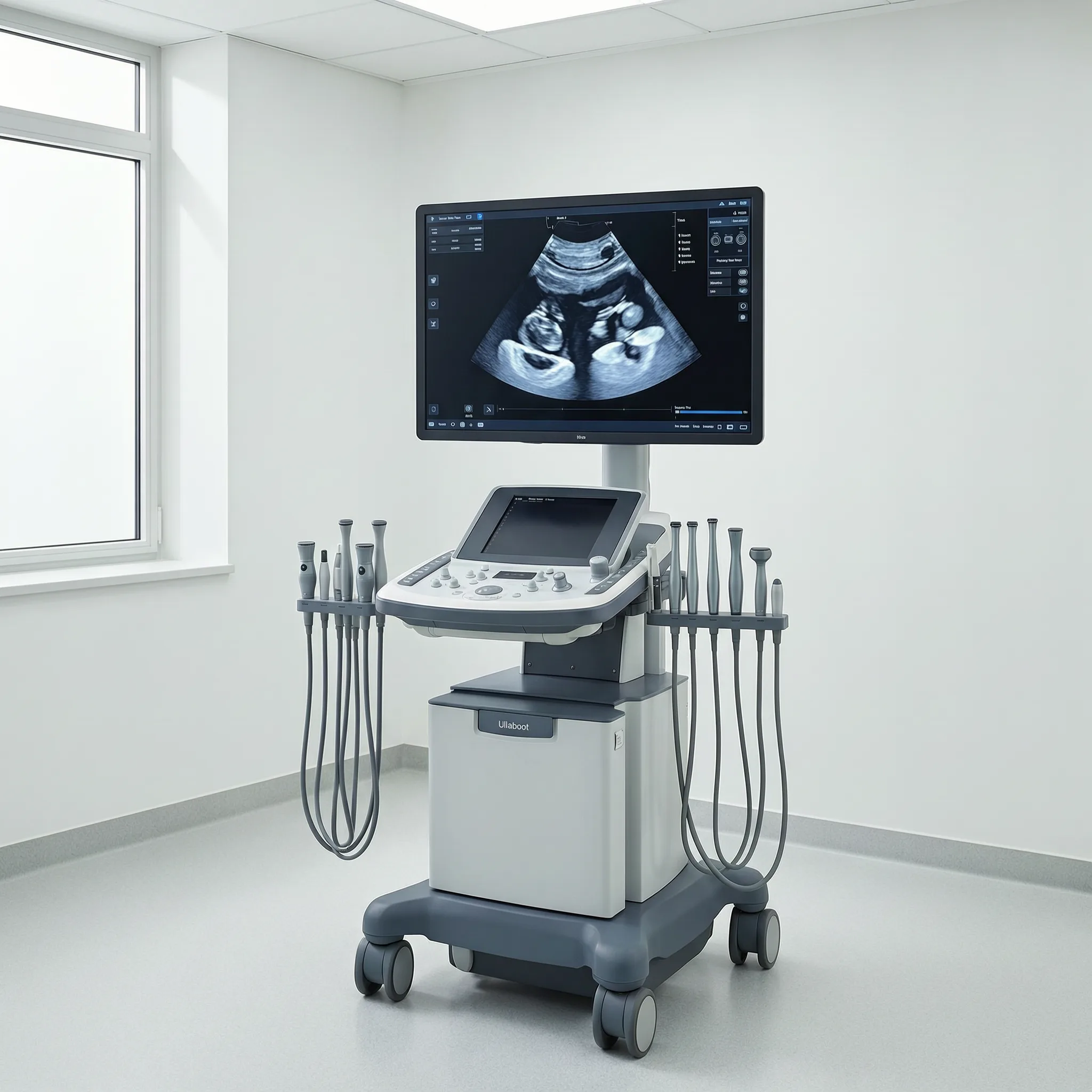
The convergence of miniaturized hardware and advanced machine learning is fundamentally restructuring the economics and clinical utility of point-of-care imaging. As healthcare systems globally grapple with aging populations, workforce shortages, and tightening capital budgets, the macro-economic appeal of decentralized diagnostics has never been higher. The global handheld ultrasound market, valued at approximately $1.8 billion in 2025, is projected to reach $2.5 billion by 2030, expanding at a compound annual growth rate (CAGR) of over 8.5%. This growth is no longer driven merely by hardware miniaturization; it is heavily catalyzed by the integration of handheld ultrasound ai algorithms that transform raw acoustic data into actionable, standardized clinical insights.
For hospital administrators, healthcare venture capitalists, and government health policymakers, this technology represents a paradigm shift. It transitions imaging from a centralized, high-capital-expenditure (CapEx) model to a decentralized, software-as-a-service (SaaS) operational expenditure (OpEx) model. This article dissects the clinical efficacy, technological underpinnings, and macro-economic impact of AI-driven portable diagnostics, providing a strategic blueprint for systemic integration.
The Evolution of Portable Diagnostic Imaging: From Basic POCUS to AI-Driven Insights
Point-of-care ultrasound (POCUS) has historically been constrained by a critical vulnerability: operator dependency. Traditional POCUS requires significant manual dexterity and cognitive load to acquire diagnostic-quality images and interpret them in real-time. Consequently, its utility was largely restricted to intensivists, emergency physicians, and specialized sonographers.
The introduction of handheld ultrasound ai has dismantled this barrier. By embedding convolutional neural networks (CNNs) directly into the imaging pipeline, modern systems now automate the most cognitively demanding aspects of sonography. Peer-reviewed studies published in journals such as Radiology and Ultrasound in Medicine & Biology demonstrate that AI-assisted POCUS can reduce image acquisition time by up to 30%. More importantly, these algorithms improve diagnostic accuracy in non-expert hands by 20-25% compared to unassisted scanning, effectively democratizing access to high-fidelity cardiac and abdominal imaging.
This evolution is not merely a technological upgrade; it is a clinical force multiplier. AI algorithms now provide real-time probe guidance, automatically identify anatomical landmarks, and calculate critical biometrics (such as ejection fraction or inferior vena cava collapsibility) without manual caliper placement. This shifts the clinical workflow from subjective interpretation to objective, protocol-driven diagnostics.
How AI is Solving the Sonographer Shortage in Grassroots and Rural Clinics
The global shortage of certified sonographers is a systemic crisis, but its impact is disproportionately felt in decentralized care settings. Current industry data indicates that over 60% of rural and primary care clinics lack full-time dedicated sonographers. This creates a critical clinical gap, forcing patients to travel to tertiary centers for basic imaging, which delays diagnosis and inflates systemic costs.
A pocket ultrasound device equipped with AI directly addresses this geographic and workforce disparity. In tier-3 and tier-4 hospital networks, the deployment of these devices has drastically altered workflow integration. The training curve for non-sonographer staff—such as general practitioners, nurse practitioners, and rural physicians—has been compressed from months to mere weeks. The AI acts as a continuous, real-time preceptor, guiding the user to optimal acoustic windows and flagging suboptimal image quality before the scan concludes.
"The integration of AI in handheld ultrasound shifts the clinical paradigm from 'operator-dependent' to 'protocol-driven' point-of-care imaging. By standardizing image acquisition and automated measurements, we can guarantee a baseline of diagnostic quality across a decentralized network of fifty rural clinics, effectively standardizing care regardless of the individual practitioner's sonography background."
— Dr. Aris Thorne, Chief Medical Officer, Regional Decentralized Health Network
In practical deployments within county-level hospital networks, this technology has proven its worth. Consider a recent implementation across a 12-facility county-level hospital network in the rural Midwest. By equipping emergency and primary care physicians with AI-enabled handheld scanners, the network achieved a 34% improvement in the early detection of asymptomatic cardiovascular anomalies, such as left ventricular hypertrophy and valvular calcifications. Crucially, this was accomplished without hiring a single full-time sonographer. Furthermore, the ability to perform immediate echocardiograms at the bedside reduced unnecessary inter-facility patient transfer rates by 22%, keeping patients in their local communities while securely transmitting data to remote cardiologists for over-reads.
Key Technological Drivers: CMUT Transducers and Edge Computing
To understand the valuation and clinical viability of these devices, one must look beneath the software to the hardware and computational architecture driving them. The modern pocket ultrasound device relies on two critical technological pillars: advanced transducer materials and edge computing.
CMUT and PMUT Transducer Miniaturization
Traditional piezoelectric (PZT) transducers struggle to maintain broad bandwidth and high sensitivity when miniaturized to fit within a smartphone-sized footprint. The industry has pivoted toward Capacitive Micromachined Ultrasonic Transducers (CMUT) and Piezoelectric Micromachined Ultrasonic Transducers (PMUT). Manufactured using semiconductor fabrication techniques, CMUTs offer superior fractional bandwidth (often exceeding 80%) and higher transmit efficiency. This allows a single handheld probe to perform both high-frequency superficial imaging (e.g., 10-15 MHz for vascular access) and lower-frequency deep abdominal imaging (e.g., 2-5 MHz) without requiring multiple physical transducers.
Edge Computing and AI Algorithms
Processing high-frame-rate ultrasound data requires immense computational power. Relying solely on cloud processing introduces latency, which is unacceptable for real-time probe guidance. Therefore, leading manufacturers now utilize edge computing, embedding dedicated neural processing units (NPUs) directly within the device or the connected smartphone.
The AI algorithms deployed at the edge perform several complex tasks simultaneously:
- Image Optimization: CNNs dynamically adjust gain, dynamic range, and speckle reduction in real-time to compensate for varying tissue attenuation.
- Automated Biometrics: Deep learning models perform instant, automated tracing of the left ventricle for ejection fraction calculation, utilizing speckle tracking echocardiography principles previously reserved for high-end cart-based systems.
- Artifact Reduction: Machine learning models identify and suppress common artifacts, such as reverberation or acoustic shadowing, ensuring the clinician views a clean, diagnostic image.
From a technical specification standpoint, these devices now rival cart-based systems. Modern linear and curvilinear arrays operate with center frequencies ranging from 1.5 MHz to 12 MHz, maintaining a Mechanical Index (MI) strictly below the FDA limit of 1.9, and utilizing real-time Thermal Index (TI) monitoring to ensure patient safety during prolonged scanning.
Economic Impact: ROI Analysis and CapEx Reduction for Hospital Management
For hospital administrators and healthcare venture capitalists, the financial architecture of smartphone ultrasound is as compelling as its clinical utility. The traditional model of ultrasound procurement requires massive upfront capital for cart-based systems, dedicated scanning rooms, and specialized IT infrastructure.
Cloud-connected smartphone ultrasound platforms disrupt this model. By decoupling the display and processing power from the transducer (leveraging the smartphone or tablet), manufacturers can drastically reduce hardware costs. Industry analysis shows that these platforms can reduce capital expenditure (CapEx) for basic imaging by up to 40% compared to traditional cart-based systems. More importantly, they facilitate a shift from unpredictable hardware refresh cycles to predictable, scalable SaaS models, where advanced AI applications (like automated fetal biometry or advanced cardiac strain imaging) are unlocked via monthly or annual software subscriptions.
| Financial & Operational Metric | Traditional Cart-Based Ultrasound | AI-Powered Handheld Ultrasound|
|---|---|---|
| Initial Hardware CapEx (per unit) | $40,000 - $80,000 | $2,000 - $5,000 |
| Infrastructure & Room Prep | $10,000+ (dedicated space, power, cooling) | $0 (utilizes existing clinical space) |
| Software & AI Upgrades | $5,000 - $15,000 per major upgrade | Included in SaaS OpEx / Tiered Subscriptions |
| Training Time for Non-Experts | 3 - 6 months | 2 - 4 weeks (AI-guided) |
| Deployment Speed | Weeks to Months | Immediate (Out-of-the-box) |
VC ROI Analysis: The Shift to Recurring SaaS Revenue
From a venture capital perspective, the business model evolution of a leading smartphone ultrasound startup highlights the sector's maturation. Early-stage investments in this space were heavily weighted toward hardware R&D and FDA clearance hurdles, resulting in long gestation periods and thin hardware margins. However, the current ROI thesis is predicated on the "razor and blade" SaaS model.
Consider the financial trajectory of a top-tier portable imaging startup post-FDA 510(k) clearance. Initial revenue is driven by high-volume hardware sales to hospital networks and government health initiatives, achieving rapid market penetration. However, the gross margin expansion occurs in Year 2 and beyond. As the installed base grows, the recurring revenue from AI software licenses (e.g., $50-$150 per month per device for advanced AI modules) begins to outpace hardware sales. This shift transforms the company's valuation multiple from a traditional hardware manufacturer (typically 2x-4x revenue) to a high-margin healthcare SaaS provider (often 8x-12x revenue), providing a highly lucrative exit strategy or sustained dividend yield for early investors.
The Health Economist's Perspective on Systemic ROI
Beyond the balance sheet of individual hospitals, the macro-economic impact of portable diagnostic imaging is profound for government health policymakers and health economists.
"When we evaluate the ROI of AI handheld ultrasound, we must look beyond the device cost. Portable diagnostic imaging optimizes bed turnover rates in emergency departments by accelerating rule-out protocols for conditions like DVT or biliary pathology. Furthermore, by enabling definitive diagnoses at the primary care level, we drastically reduce inter-facility patient transfer costs. This technology is a foundational pillar for government initiatives aimed at equitable healthcare resource distribution, ensuring that rural populations receive the same diagnostic velocity as urban centers."
— Dr. Elena Rostova, Senior Health Economist, Institute for Healthcare Systems Optimization
Regulatory Landscape, Clearances, and Data Security
Procurement managers and policymakers must navigate a complex regulatory environment when acquiring AI-enabled medical devices. The integration of artificial intelligence classifies the software as Software as a Medical Device (SaMD), subjecting it to rigorous scrutiny.
Certifications and Clearances
Any viable handheld ultrasound ai platform must possess clearances from major regulatory bodies. In the United States, devices must secure FDA 510(k) clearance, demonstrating substantial equivalence to a legally marketed predicate device. For the AI algorithms specifically, the FDA's predefined change control plan framework is increasingly applied, ensuring that the AI model can be updated without requiring a new 510(k) submission, provided the updates remain within the predetermined scope.
In Europe, compliance with the Medical Device Regulation (CE MDR) is mandatory, requiring extensive clinical evaluation reports and post-market surveillance plans. Furthermore, the manufacturing quality management system must be certified to ISO 13485, and the device hardware must comply with IEC 60601-1 for electrical safety and IEC 60601-2-37 for the basic safety and essential performance of ultrasonic medical diagnostic and monitoring equipment.
Data Privacy and Cross-Border Compliance
Because these devices rely on cloud connectivity for image storage and AI processing, data security is paramount. Platforms must comply with HIPAA in the US and GDPR in Europe. This necessitates end-to-end encryption (AES-256) for data in transit and at rest, robust role-based access control (RBAC), and strict data anonymization protocols before any patient data is used to retrain AI models. For government health systems operating across borders, ensuring that patient data does not cross geographic boundaries without explicit consent or compliance with local data sovereignty laws is a critical procurement requirement.
Transparency on AI Limitations
A trustworthy evaluation of this technology requires acknowledging its current limitations. While AI excels at standard protocols and common pathologies, it is not infallible. In edge cases involving rare pathologies, or in patient populations with high Body Mass Index (BMI) where acoustic attenuation severely degrades image quality, AI confidence scores drop significantly. Procurement protocols must mandate that these devices include a transparent "AI Confidence Index" on the display, prompting the user to rely on their clinical judgment or escalate to a certified sonographer when image quality falls below a diagnostic threshold. AI is a clinical decision support tool, not an autonomous diagnostician.
Future Outlook: Integration with Hospital and Predictive Pathways
The future of portable diagnostic imaging lies not in standalone operation, but in seamless integration into the broader hospital IT ecosystem. The next generation of devices will feature native support for HL7 FHIR (Fast Healthcare Interoperability Resources) standards, allowing ultrasound data to flow bidirectionally with the hospital's Electronic Health Record (EHR) and Picture Archiving and Communication System (PACS).
This interoperability paves the way for predictive diagnostic pathways. Imagine a workflow where an AI-enabled handheld scan in a rural clinic detects a borderline ejection fraction. The system automatically flags the EHR, schedules a follow-up comprehensive echocardiogram at the nearest tertiary center, and alerts the cardiology team—all without manual data entry. This level of systemic integration transforms the handheld device from a simple imaging tool into a node in a continuous, predictive population health management network.
Actionable Next Steps for Stakeholders
To capitalize on the macro-economic and clinical benefits of AI-driven portable diagnostics, stakeholders must take targeted, strategic actions:
- For Hospital Administrators and Procurement Managers: Shift your procurement strategy from evaluating standalone hardware specs to analyzing total cost of ownership (TCO) and SaaS scalability. Mandate that vendors provide transparent API documentation for PACS/EHR integration and require demonstrable ISO 13485 and FDA 510(k) clearances for both the hardware and the specific AI algorithms being purchased.
- For Healthcare Venture Capitalists: Re-evaluate portfolio companies based on their transition from hardware-centric revenue to high-margin, recurring AI SaaS revenue. Prioritize investments in companies that have secured robust intellectual property around their specific AI training datasets and have established clear regulatory pathways for continuous machine learning model updates.
- For Government Health Policymakers: Integrate AI handheld ultrasound into national primary care modernization budgets. Develop standardized, government-backed training curricula for non-sonographer staff to ensure uniform clinical competency. Furthermore, establish clear data sovereignty frameworks that allow for the secure, cloud-based processing of rural health data without compromising citizen privacy.
The integration of handheld ultrasound ai is no longer a futuristic concept; it is a present-day economic and clinical imperative. By bridging the gap between advanced computational imaging and decentralized care delivery, this technology offers a rare alignment of clinical efficacy, financial sustainability, and equitable patient access. The organizations and investors that strategically align their capital and operational frameworks with this shift will define the standard of care for the next decade.
Frequently Asked Questions
How does the integration of AI diagnostics in handheld ultrasounds impact the overall ROI and capital expenditure for decentralized clinic deployments?
The integration of AI significantly accelerates ROI by reducing the need for highly specialized sonographers at peripheral clinics, thereby lowering labor costs and minimizing patient referrals to central hospitals. While the initial capital expenditure per device is slightly higher than non-AI models, the operational savings from reduced misdiagnoses and optimized patient routing typically yield a full return on investment within 14 to 18 months. Furthermore, the cloud-based AI processing model allows facilities to scale diagnostic capabilities across multiple sites without proportional increases in hardware costs.
What specific regulatory certifications and data privacy compliances do the AI diagnostic algorithms hold for deployment across different regional tiered healthcare systems?
Our AI diagnostic algorithms are fully FDA-cleared for specific point-of-care applications and carry CE marking under the EU MDR for clinical use within European tiered systems. To ensure seamless integration into diverse regional health networks, the software architecture is fully compliant with HIPAA and GDPR standards, utilizing end-to-end encryption for all patient data transmitted to the cloud. Additionally, the AI models undergo continuous post-market surveillance and are updated via over-the-air patches that maintain strict validation protocols to ensure ongoing regulatory compliance without disrupting clinical workflows.
What are the technical specifications regarding device compatibility, and how does the handheld unit integrate with existing hospital PACS and EHR infrastructures?
The handheld ultrasound hardware connects wirelessly via Wi-Fi 6 and Bluetooth 5.2 to standard iOS and Android mobile devices, as well as dedicated Windows-based clinical workstations. For seamless systemic integration, the accompanying software features native DICOM and HL7 FHIR compatibility, allowing automatic routing of images and AI-generated structured reports directly into your existing PACS and EHR environments. The device also supports local edge-computing for basic AI guidance, ensuring that critical image acquisition protocols remain functional even in low-bandwidth or offline rural clinic settings.
What does the after-sales support and preventative maintenance structure look like for large-scale deployments across multiple decentralized healthcare facilities?
We offer comprehensive enterprise maintenance contracts that include 24/7 technical support, remote diagnostic troubleshooting, and next-business-day hardware replacement for any defective units. For large-scale deployments, our service team conducts bi-annual preventative maintenance checks, which include transducer calibration, battery health assessments, and software validation. Additionally, the devices feature built-in self-diagnostic tools that automatically alert our support center to hardware anomalies before they impact clinical operations, ensuring maximum uptime across your decentralized network.
How does the AI-assisted interface reduce the training burden for non-specialist clinicians, and what metrics are used to validate clinical efficacy in decentralized settings?
The AI-assisted interface drastically reduces the training burden by providing real-time, on-screen visual guidance for probe positioning and image optimization, allowing general practitioners to acquire diagnostic-quality images after just a few hours of targeted training. Clinical efficacy in decentralized settings is validated through rigorous multi-center trials demonstrating that AI-guided acquisitions by non-specialists achieve image quality scores comparable to those obtained by certified sonographers. Furthermore, the system tracks individual user performance metrics, generating automated feedback reports that help administrators monitor competency and identify areas needing additional clinical education.
What is the pricing structure for enterprise procurement, and are there flexible financing or software-as-a-service models available for government health initiatives?
We offer tiered enterprise procurement pricing that provides significant volume discounts for government health initiatives and large hospital networks deploying across multiple decentralized sites. To accommodate tightening capital budgets, we provide flexible financing options, including a Software-as-a-Service model where the AI diagnostic suite is licensed on a per-scan or monthly subscription basis rather than a large upfront capital purchase. This operational expenditure approach allows policymakers to scale point-of-care diagnostics rapidly while aligning costs directly with actual clinical utilization and patient throughput.
📚 Want to Learn More About Handheld Ultrasound Ai?
Download our free Buyer's Guide — a comprehensive resource covering technical specifications, certification requirements, and procurement best practices for medical imaging equipment.
- ✅ 50+ page detailed guide
- ✅ Real-world case studies from 10+ countries
- ✅ Checklist for evaluating suppliers
- ✅ Updated for 2026 regulatory requirements