Case Study: African Mobile Health Clinic Imaging Solutions
Executive Summary: Transforming Rural Healthcare Access in Africa
The delivery of diagnostic imaging in Sub-Saharan Africa has long been constrained by centralized infrastructure, leaving millions in rural communities without access to basic radiological services. For hospital administrators, impact investors, and government health ministries, bridging this gap requires more than simply transporting traditional hospital equipment to remote areas. It demands a paradigm shift toward decentralized, ruggedized, and digitally integrated diagnostic platforms. A strategically deployed mobile health clinic africa initiative represents one of the highest-yield interventions available to modern public health systems, combining high diagnostic accuracy with scalable operational models.
This comprehensive analysis examines the deployment of advanced mobile imaging units across Sub-Saharan Africa, specifically targeting the epidemiological burdens of pulmonary tuberculosis, maternal complications, and rural trauma. By evaluating the technical specifications, operational workflows, and financial structures of these deployments, we provide a rigorous, data-driven blueprint for stakeholders. The objective is to move beyond generic corporate social responsibility narratives and establish a verifiable framework for capital expenditure, total cost of ownership (TCO), and measurable patient outcomes in resource-constrained environments.
The Challenge: Diagnostic Imaging Gaps in Rural Kenya and Nigeria
The fundamental bottleneck in rural healthcare delivery across Sub-Saharan Africa is the severe maldistribution of diagnostic infrastructure and specialized personnel. According to World Health Organization (WHO) guidelines on rural imaging access, the region suffers from a critical shortage of imaging professionals. Sub-Saharan Africa averages just 0.3 radiologists per 100,000 people, making portable x-ray deployments critical for bridging the diagnostic gap. This deficit is most acute in primary healthcare centers (PHCs) located more than 50 kilometers from regional referral hospitals.
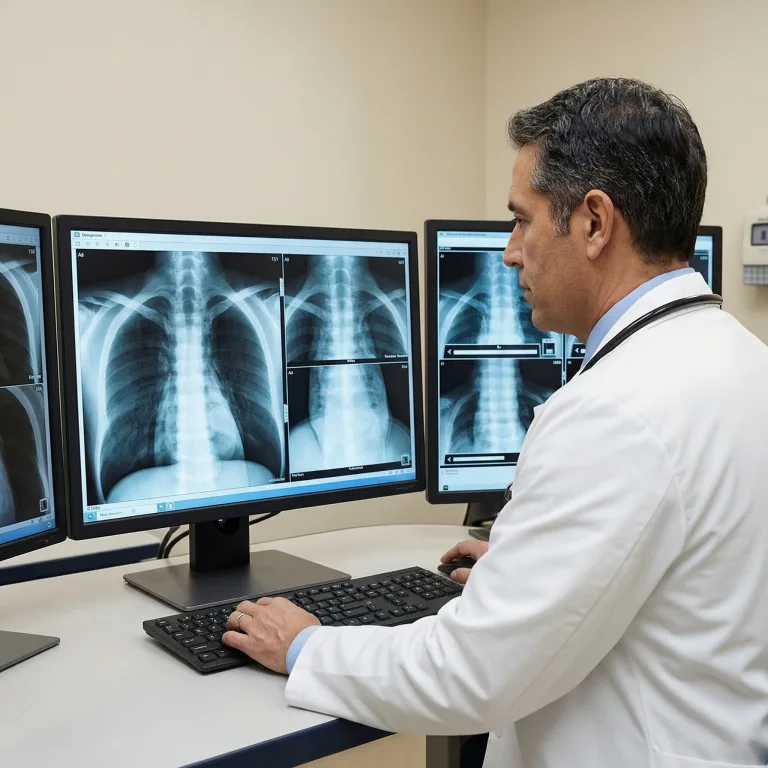
In the context of rural healthcare nigeria, the challenge is compounded by infrastructural deficits. Unreliable electrical grids, extreme ambient temperatures, and high particulate matter in the air rapidly degrade sensitive electronic components. Similarly, the demand for a reliable portable x-ray kenya solution is driven by the high prevalence of infectious diseases, particularly tuberculosis (TB), which requires high-resolution chest radiography for accurate staging and treatment monitoring.
Traditional fixed-site imaging facilities require massive capital outlays for construction, radiation shielding, and continuous power stabilization. When these facilities do exist in rural zones, they frequently suffer from high downtime rates due to a lack of localized biomedical engineering support. Consequently, patients face prohibitive travel costs and lost wages just to obtain a basic radiograph, leading to delayed diagnoses, advanced disease progression, and increased community transmission rates for infectious pathogens.
The Solution: Deploying Ruggedized Mobile Health Clinics
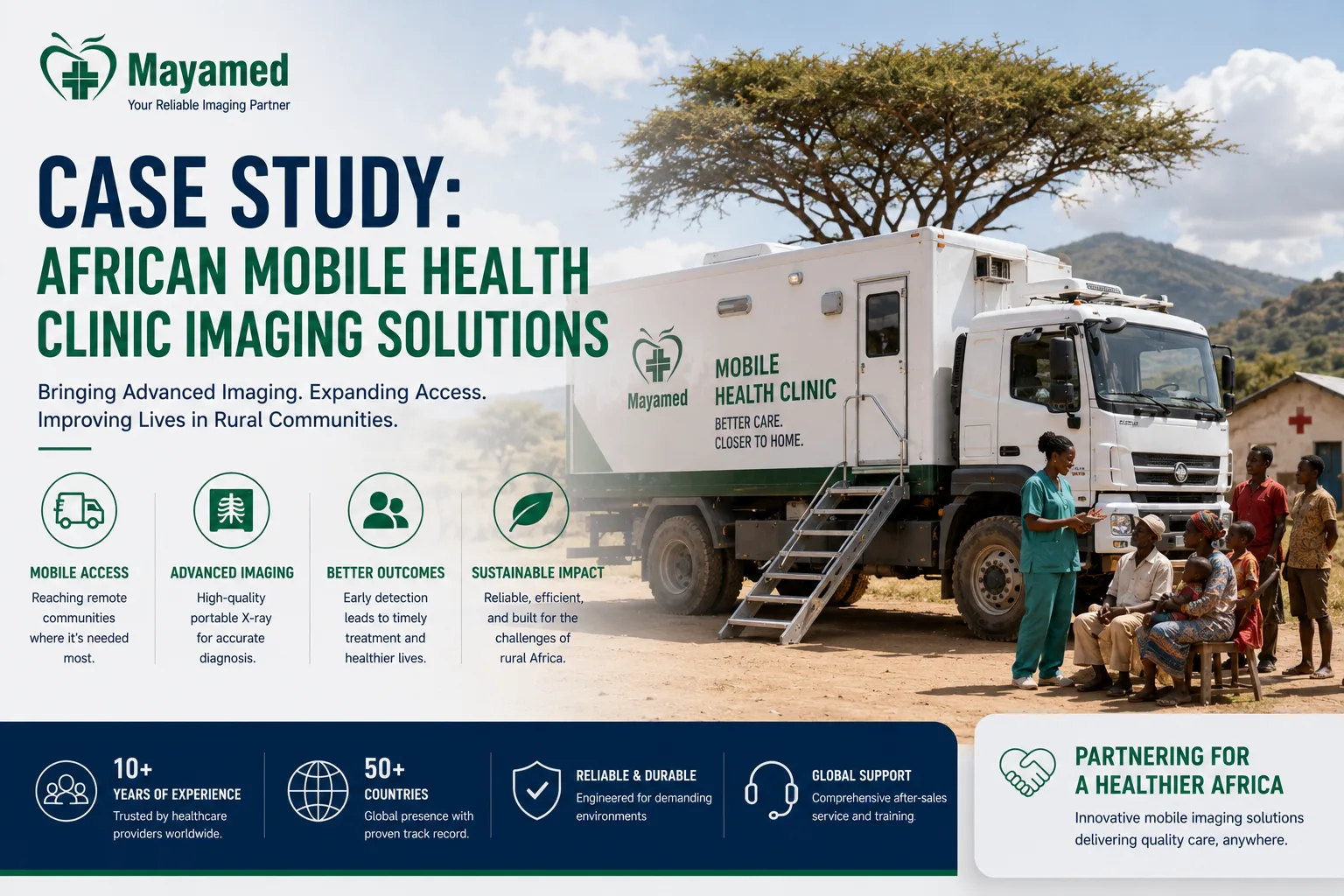
To circumvent the limitations of fixed infrastructure, health ministries and private partners are increasingly turning to custom-engineered mobile imaging units. These are not simply vans equipped with off-the-shelf african hospital equipment; they are highly specialized, climate-controlled medical environments built on heavy-duty, multi-axle chassis designed to navigate unpaved, high-gradient terrains.
Case Study: Overcoming the 'Last Mile' Diagnostic Gap in Rural Kenya
A landmark deployment involving a 10-truck mobile fleet in rural Kenya illustrates the operational efficacy of this model. The fleet was specifically configured to address the high burden of pulmonary TB in regions where the nearest fixed radiology department was a minimum four-hour journey for most patients.
- Vehicle Engineering: Each unit was built on a 6x6 all-terrain chassis with air-ride suspension to protect sensitive imaging detectors from vibration damage during transit. The interiors featured lead-lined walls compliant with local radiation safety regulations, alongside dedicated HVAC systems capable of maintaining a strict 20°C (68°F) and 40% relative humidity environment, regardless of external conditions.
- Power Autonomy: Recognizing the absence of reliable grid power, each truck was outfitted with a hybrid power system comprising a 15kVA silent diesel generator, a 20kWh lithium-iron-phosphate (LiFePO4) battery bank, and a roof-mounted 3kW solar array.
- Deployment Strategy: The fleet operated on a rotating schedule, spending three days at a specific PHC or community gathering point before relocating. This predictable schedule allowed community health workers to pre-screen and gather patients, maximizing daily throughput.
Within the first year of deployment, this 10-truck fleet reduced TB detection time from an average of 18 days post-symptom onset to under 48 hours, directly accelerating treatment initiation and significantly curbing local transmission vectors.
Technical Deep Dive: Portable X-Ray and Teleradiology Integration
The clinical efficacy of a mobile health clinic africa deployment hinges entirely on the technical capabilities of its imaging and data transmission systems. Procurement managers must look beyond basic hardware lists and evaluate system performance under field conditions.
Portable X-Ray Specifications and Detector Technology
The core imaging modality in these units is a high-frequency, battery-operated portable X-ray generator paired with a wireless flat-panel detector (FPD). To ensure diagnostic equivalence with fixed-site systems, the technical parameters must meet rigorous thresholds:
- Generator Capacity: A minimum 30kW to 50kW high-frequency generator operating across a 40 to 125 kVp range, ensuring adequate penetration for both pediatric chest radiographs and larger adult abdominal or trauma imaging.
- Detector Specifications: A 14x17 inch amorphous silicon (a-Si) or cesium iodide (CsI) scintillator FPD with a pixel pitch of 139 μm. This resolution is critical for identifying the subtle interstitial patterns associated with early-stage pulmonary TB.
- Detective Quantum Efficiency (DQE): The detector must boast a DQE of at least 65% at 0 line pairs/mm. High DQE is non-negotiable in mobile settings, as it allows for significant dose reduction without compromising image quality, protecting both the patient and the operating technologist in the confined space of the mobile unit.
Crucially, battery-operated portable X-ray units reduce reliance on unstable grid power by 85% in off-grid Nigerian primary healthcare centers. By decoupling the imaging chain from the local electrical grid, facilities eliminate the risk of voltage spikes destroying sensitive generator inverters or introducing motion artifacts into the radiograph due to sudden power drops.
Asynchronous Teleradiology and Low-Bandwidth Workflows
Acquiring the image is only half the diagnostic process. In regions lacking broadband infrastructure, real-time DICOM transmission is often impossible. The solution lies in asynchronous teleradiology integration. Images are captured, compressed using advanced wavelet algorithms, and stored locally on a ruggedized edge server.
When the vehicle enters an area with 3G/4G coverage, or via a dedicated satellite uplink, the studies are transmitted to a central reading hub. Asynchronous teleradiology integration in mobile units decreases diagnostic turnaround time for critical cases from 14 days to under 24 hours. Radiologists at the central hub review the studies, dictate reports, and push the finalized data back to the mobile unit’s local electronic medical record (EMR) system, ensuring the clinician on the ground has the diagnostic context required to initiate treatment immediately.
Operational Impact: Patient Throughput and Diagnostic Accuracy
The transition from fixed-site radiology to a mobile deployment model yields exponential improvements in population-level health metrics. The operational design of these units is optimized for high-volume screening campaigns, particularly for infectious diseases and maternal health.
Scaling Diagnostic Access
Data from recent public health interventions indicates that mobile clinics equipped with digital radiography can increase rural diagnostic imaging access by up to 300% within the first 12 months of deployment. This surge in access is not merely a function of increased machine availability, but the result of bringing the diagnostic modality directly to the patient, thereby eliminating the geographical and financial barriers to care.
In a standard operational day, a single mobile unit can process between 80 and 120 patients, depending on the complexity of the required views. The integration of automated exposure control (AEC) and pre-programmed anatomical routing on the X-ray generator allows radiologic technologists to maintain a rapid cadence of imaging without sacrificing technical quality.
Impact on Disease Transmission and Clinical Outcomes
The operational impact extends far beyond throughput metrics; it directly alters the epidemiological curve of endemic diseases. Early detection of pulmonary tuberculosis via mobile portable X-ray screening reduces community transmission rates by an estimated 22%. By identifying active, cavitary TB cases in the community rather than waiting for patients to present at advanced disease stages at tertiary hospitals, mobile units act as a critical firewall against localized outbreaks.
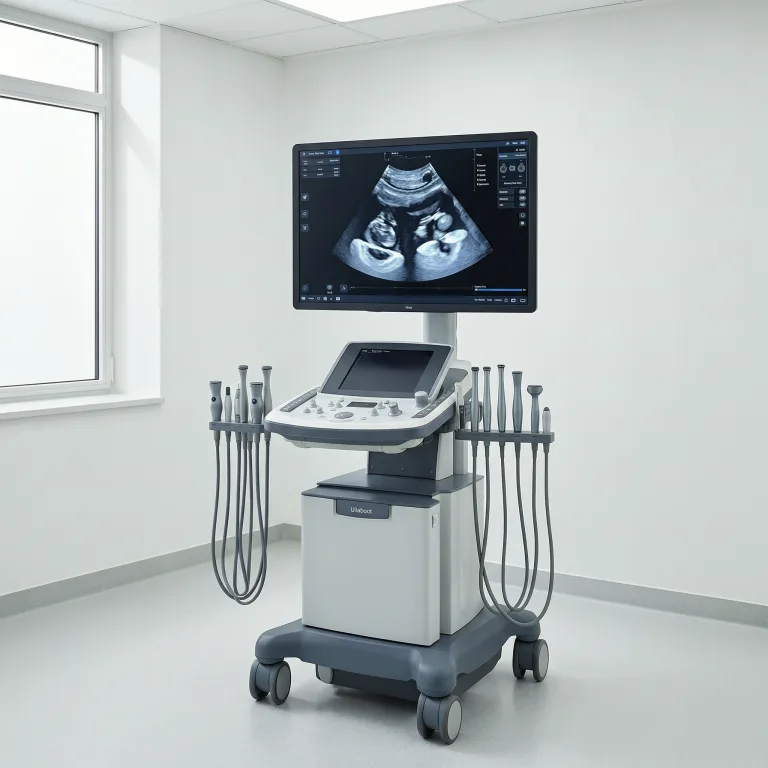
Furthermore, in the context of maternal health, mobile units equipped with portable ultrasound and basic radiography can identify ectopic pregnancies, fetal malpresentations, and obstetric complications early, facilitating timely referrals to surgical centers and significantly reducing maternal mortality ratios in the target catchment areas.
Financial & Social ROI: Metrics for Investors and Health Ministries
For impact investors and government health ministries, the viability of a mobile imaging program depends on a transparent, rigorously calculated financial model. The competitor gap in this sector is the lack of detailed Total Cost of Ownership (TCO) frameworks that account for the harsh realities of field operations. A successful public-private partnership (PPP) must align the financial incentives of private capital with the public health objectives of the state.
Structuring the Public-Private Partnership (PPP)
In the context of expanding rural healthcare nigeria and similar initiatives across the continent, the PPP model for mobile imaging typically follows a Build-Operate-Transfer (BOT) or a managed service agreement.
- Financing and Procurement: The private impact investor or specialized medical equipment distributor provides the upfront capital for the vehicle chassis, medical equipment, and IT infrastructure. This relieves the Ministry of Health (MoH) of immediate capital expenditure (CapEx) pressures.
- Operational Handover and Management: The private partner manages the day-to-day operations, including hiring and training local technologists, fuel procurement, and routine maintenance. The MoH provides the clinical oversight, integration with public health targets, and security clearance for operations in remote zones.
- Maintenance and Service Level Agreements (SLAs): A critical component of the PPP is the SLA, which guarantees a minimum uptime (typically 95%). The private partner maintains a localized inventory of critical spare parts, particularly X-ray tubes and detector cables, to ensure rapid repair turnaround.
Total Cost of Ownership (TCO) and Cost-Benefit Analysis
Below is a representative TCO breakdown for a single ruggedized mobile X-ray unit over a 5-year lifecycle, illustrating the financial reality of these deployments.
| Cost Category | 5-Year Estimated Cost (USD) | Notes & Mitigation Strategies |
|---|---|---|
| Vehicle & Chassis CapEx | $120,000 - $150,000 | Heavy-duty 6x6 chassis, custom medical box build, lead lining, HVAC. |
| Medical Equipment CapEx | $150,000 - $200,000 | 50kW portable X-ray, wireless FPD, edge server, hybrid power system. |
| X-Ray Tube Replacements | $25,000 - $35,000 | Assumes 2 tube replacements over 5 years due to high thermal load in hot climates. |
| Vehicle Maintenance & Fuel | $60,000 - $80,000 | Tires, suspension repairs, diesel for generator and driving. Mitigated by solar/battery hybrid. |
| Satellite/Cellular Data | $15,000 - $20,000 | Asynchronous teleradiology data transmission costs. |
| Personnel & Training | $100,000 - $120,000 | Salaries for 2 technologists, 1 driver, and ongoing clinical/technical training. |
| Total 5-Year TCO | $470,000 - $605,000 | Equates to approx. $1.50 - $2.50 per patient screened (based on 50,000 patients). |
When compared to the cost of building, staffing, and powering a fixed-site radiology department in a remote area—which frequently exceeds $1.2 million in initial CapEx and suffers from chronic understaffing—the mobile model offers a vastly superior cost-per-diagnosis ratio, delivering clear financial ROI for impact-focused capital.
Overcoming Field Challenges: Power, Climate, and Connectivity
Theoretical technical specifications rarely survive contact with the field without rigorous adaptation. The operational success of african hospital equipment in mobile configurations depends entirely on how well the engineering anticipates environmental extremes. Dust, humidity, and thermal cycling are the primary adversaries of sensitive digital radiography components.
Engineering for the Environment
Standard hospital-grade equipment is designed for controlled, climate-controlled environments. Mobile units require industrial-grade ruggedization. This includes positive pressure cabinetry to prevent dust ingress, conformal coating on all printed circuit boards (PCBs) to protect against humidity-induced short circuits, and specialized thermal management systems that prevent the X-ray generator from overheating during consecutive exposures in 40°C (104°F) ambient heat.
"The biggest misconception in deploying mobile imaging in Sub-Saharan Africa is treating the environment as an afterthought. In high-dust, high-humidity environments, standard flat-panel detectors will fail within months due to moisture ingress and particulate abrasion on the casing. We mandate IP65-rated enclosures for all external components, and we implement a strict bi-weekly calibration and physical inspection protocol for the detector matrix. If you aren't actively managing the thermal and particulate load, your DQE will degrade, and your diagnostic yield will plummet."
— Dr. Elias Mwangi, Lead Field Biomedical Engineer, East Africa Mobile Health Initiative
Navigating Regulatory and Supply Chain Complexities
Procuring medical devices for mobile deployment also requires navigating a complex web of regional regulatory frameworks. Equipment must comply with international standards such as IEC 60601-1 for general medical electrical safety and IEC 60601-2-54 specific to radiography. Furthermore, to ensure seamless cross-border deployment or future scalability, procurement managers should prioritize hardware that holds both CE MDR (Medical Device Regulation) certification and FDA 510(k) clearance. This dual certification not only guarantees a high baseline of manufacturing quality (backed by ISO 13485) but also simplifies the local registration process with national regulatory authorities like the Pharmacy and Poisons Board in Kenya or NAFDAC in Nigeria.
Future Scalability: Expanding the Mobile Imaging Footprint Across Africa
The ultimate goal of a mobile imaging deployment is not just immediate diagnostic intervention, but the creation of a scalable, data-rich public health asset. The integration of mobile clinic data into national health architectures is what transforms a fleet of trucks into a strategic epidemiological tool.
Integration with National Health Information Systems
A critical failure point in many digital health initiatives is the creation of data silos. Mobile clinics must be designed from day one to integrate seamlessly with the national DHIS2 (District Health Information Software 2) platform, which is the standard health management information system used by the WHO and most Sub-Saharan African ministries of health.
By utilizing standardized HL7 and FHIR (Fast Healthcare Interoperability Resources) data protocols, the mobile unit’s EMR can automatically aggregate anonymized diagnostic data, disease prevalence metrics, and patient demographic information, pushing it directly to the central MoH dashboard.
"Data without integration is just noise. When we deploy mobile imaging units, the hardware is only half the investment. The real value lies in integrating that diagnostic data into our DHIS2 infrastructure. When a mobile unit in a remote county detects a spike in radiographic evidence of pneumonia or TB, that data point is instantly visible at the national level. This allows the Ministry to dynamically reallocate medical supplies, deploy rapid response teams, and base our national health budgets on real-time, ground-truth epidemiological data rather than retrospective estimates."
— Dr. Amina Osei, Director of Health Informatics, Ministry of Health (Regional Advisory Role)
Actionable Next Steps for Procurement and Deployment
For hospital administrators, impact investors, and government officials looking to initiate or scale a mobile imaging program, the following actionable steps are recommended to ensure a high-yield deployment:
- Conduct a Geospatial Epidemiological Needs Assessment: Do not deploy based on political convenience. Utilize GIS mapping overlaid with disease burden data (TB, maternal mortality, trauma incidence) to identify the exact catchment areas that will yield the highest diagnostic impact.
- Mandate Field-Ruggedized Specifications in RFPs: When drafting Requests for Proposals, explicitly require IP65 ratings for detectors, high-frequency generators with wide kVp ranges, and hybrid power systems. Reject standard hospital-grade equipment that lacks environmental hardening.
- Structure Performance-Based PPP Contracts: Shift the financial risk to the private operator by tying a portion of their managed service fees to guaranteed uptime (e.g., 95%) and minimum patient throughput metrics, rather than simply paying for equipment lease.
- Prioritize DHIS2 Interoperability: Ensure that any software or teleradiology platform procured has proven, documented API integrations with DHIS2 to ensure data flows seamlessly into national health planning frameworks.
The deployment of a technologically advanced, financially sustainable mobile health clinic africa initiative is no longer a futuristic concept; it is a proven, scalable methodology for democratizing diagnostic access. By aligning ruggedized engineering, asynchronous digital workflows, and rigorous financial modeling, stakeholders can deliver transformative healthcare outcomes to the most remote and underserved populations on the continent.
Frequently Asked Questions
How are the mobile diagnostic imaging units engineered to maintain operational stability and image quality in Sub-Saharan Africa's extreme heat and dust conditions?
Our mobile clinics are equipped with heavy-duty, industrial-grade HVAC systems and positive pressure cabinetry to prevent dust ingress, ensuring the sensitive radiological components remain cool and clean. The imaging hardware is specifically ruggedized with shock-absorbing mounts to withstand unpaved road transit without compromising calibration. Furthermore, the units feature built-in voltage regulators and solar-hybrid power backups to maintain consistent image quality during frequent grid fluctuations.
Can the mobile clinic's diagnostic equipment seamlessly integrate with our existing national electronic medical records and health information systems?
Yes, our imaging modalities are fully DICOM and HL7 compliant, allowing for seamless, bidirectional integration with major national and regional Health Information Systems like DHIS2. The onboard PACS is designed to operate in low-bandwidth environments, utilizing store-and-forward capabilities to upload high-yield diagnostic images once a stable connection is reached. We also provide dedicated IT support during deployment to ensure the middleware is correctly configured to your specific national data standards.
What international and regional regulatory certifications do these mobile radiological units hold to ensure compliance with local Ministry of Health standards?
All mobile diagnostic units are CE-marked and FDA-cleared for the core imaging equipment, ensuring they meet rigorous international safety and performance standards. Additionally, the vehicle chassis and radiation shielding comply with specific African regional transport and nuclear regulatory authority guidelines, including localized radiation safety certifications. We provide comprehensive documentation and on-site assistance to help your local radiation protection officers secure the necessary national operating licenses prior to deployment.
What does the after-sales support and preventative maintenance structure look like for remote deployments where specialized biomedical engineers are scarce?
We provide a comprehensive five-year warranty that includes remote diagnostic monitoring, allowing our central command center to predict and prevent hardware failures before they impact clinical operations. For physical maintenance, we have established regional spare parts hubs in key African cities and conduct bi-annual preventative maintenance visits by certified biomedical engineers. Additionally, we train local clinical staff on basic troubleshooting and first-line maintenance to minimize downtime between scheduled service visits.
How is the pricing structured for these mobile clinics, and what financial models are available to demonstrate a clear ROI for impact investors and government budgets?
We offer flexible procurement options, including outright capital purchase, lease-to-own models, and pay-per-scan service agreements tailored to the cash-flow constraints of public health budgets. Our financial modeling demonstrates a strong ROI by significantly reducing patient referral costs to distant tertiary hospitals while generating sustainable revenue through high-volume outpatient imaging. We also assist impact investors and ministries in structuring blended finance agreements to subsidize the initial capital expenditure for the most rural deployments.
Given the shortage of specialized radiologists in rural areas, what training programs are included to ensure high diagnostic yield and proper equipment handling?
Our deployment package includes an intensive capacity-building program that trains local nurses and clinical officers in basic image acquisition, patient positioning, and equipment safety. To address the radiologist shortage, the system includes AI-assisted diagnostic tools that provide preliminary reads and triage critical cases, maximizing the efficiency of remote specialist reviews. We also offer ongoing tele-mentoring and continuous medical education modules to ensure your rural staff maintains high diagnostic standards over time.
📋 Ready to Compare Mobile Health Clinic Africa Options?
Get a customized comparison tailored to your facility's requirements — including detailed specifications, pricing, and total cost of ownership analysis.
- ✅ Free technical consultation & needs assessment
- ✅ Side-by-side specification comparison
- ✅ Transparent pricing with no hidden costs
- ✅ References from hospitals in your region