Low-Dose CT Scanner for Pediatric & Screening Applications: A Procurement Guide
Low-Dose CT Scanner for Pediatric & Screening Applications: A Procurement Guide
Clinical Value & Protocol Optimization
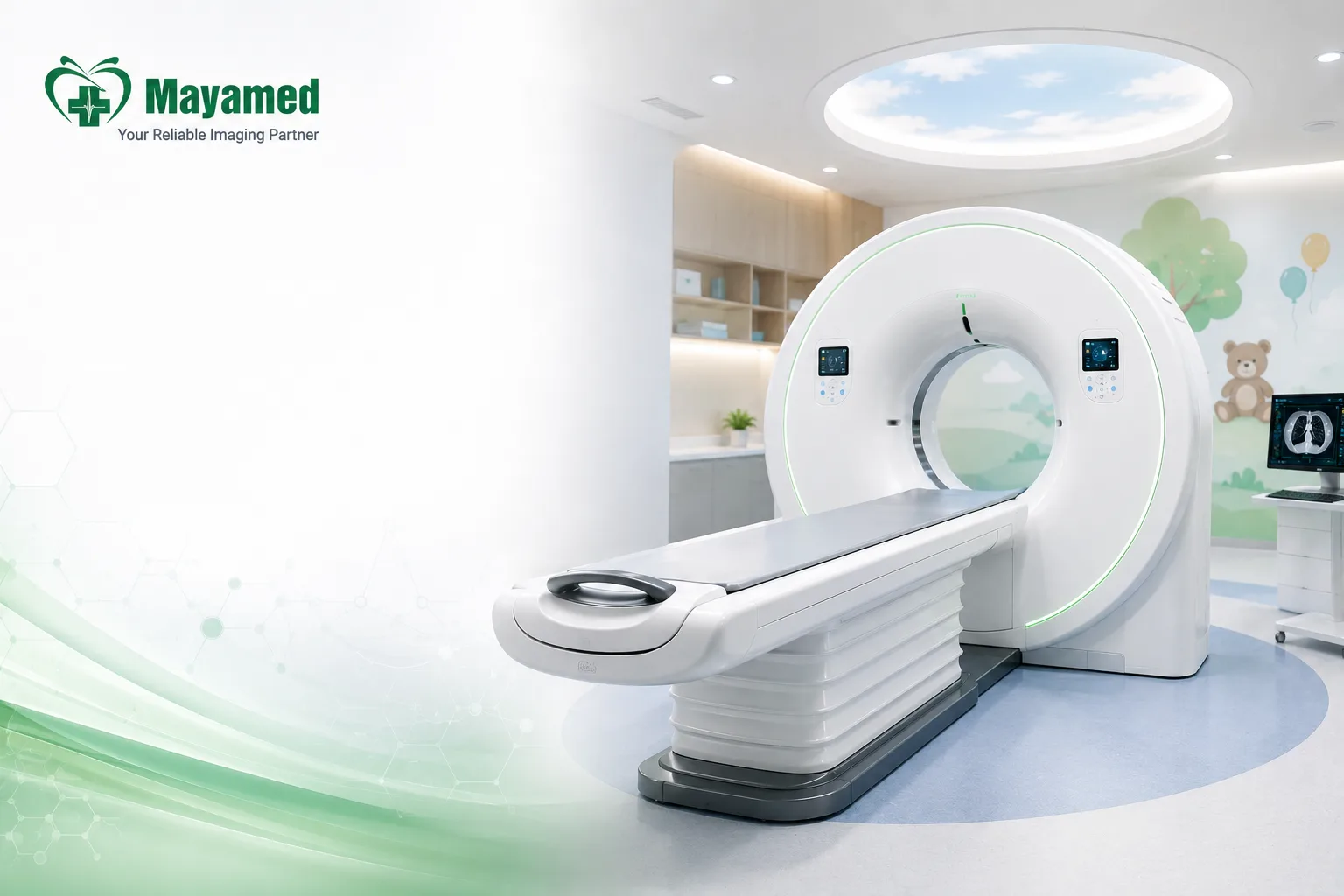
Modern low-dose CT scanner platforms are engineered to deliver diagnostic-grade imagery while adhering strictly to ALARA (As Low As Reasonably Achievable) principles. For pediatric imaging, automated pediatric CT protocol management dynamically adjusts tube current (mA) and voltage (kVp) based on patient size and anatomical region, routinely reducing effective exposure by 40–60% compared to legacy fixed-parameter systems.
In oncology and preventive care, advanced iterative reconstruction and AI-assisted noise suppression enable high-contrast nodule detection at sub-1 mSv effective doses. This makes routine lung cancer screening CT clinically viable for high-risk populations while significantly lowering cumulative lifetime exposure for patients requiring longitudinal follow-up.
Technical Specifications & Global Compliance Standards
When evaluating hardware, procurement teams should look beyond marketing claims and verify core performance metrics. Leading systems in this category typically feature:
- Detector Efficiency: High Detective Quantum Efficiency (DQE > 70% at 70 kVp) for superior signal-to-noise ratio at lower exposures.
- Gantry & Rotation: 16- to 128-slice configurations with gantry rotation speeds ≤ 0.35s, enabling rapid volumetric coverage and minimizing motion artifacts in uncooperative pediatric or critically ill patients.
- Image Reconstruction: AI-enhanced iterative algorithms delivering < 0.5 mm isotropic spatial resolution with reconstruction times under 1 second per volume.
- Power & Thermal Management: Optimized heat dissipation architecture supporting continuous high-volume scanning workloads without tube overheating or automatic thermal shutdowns.
All Mayamed-supplied imaging systems are manufactured under ISO 13485 certified quality management frameworks and carry CE MDR and FDA 510(k) clearances (where regionally applicable). Complete DICOM 3.0 compliance, cybersecurity documentation, and pre-validated IT integration protocols streamline hospital network deployment and regulatory audits.
Infrastructure Adaptation for Emerging Markets
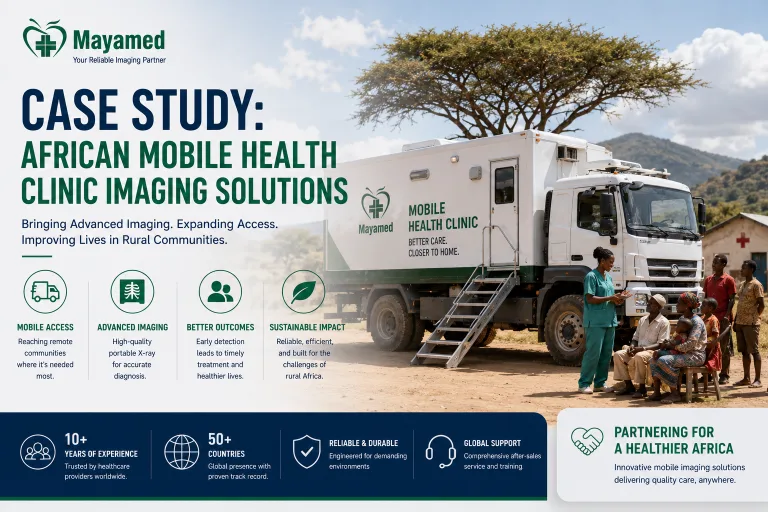
Procuring medical imaging equipment for regions across Africa, Latin America, and the Middle East demands hardware that can withstand real-world operational constraints. We’ve optimized our low-dose CT scanner configurations to address common infrastructural challenges:
- Voltage Fluctuation Tolerance: Broad input range (100V–240V AC, ±15%) with integrated surge suppression and automatic phase correction, ensuring stable operation in facilities with inconsistent grid supply or frequent load-shedding.
- Thermal & Environmental Resilience: Redesigned closed-loop cooling and high-capacity exhaust ventilation maintain optimal tube performance in ambient temperatures up to 45°C (113°F), preventing performance throttling in hot climates.
- Dust & Moisture Defense: IP54-rated console and detector housings, combined with anti-corrosion PCB coatings, extend equipment lifespan in high-humidity coastal zones or arid, dust-prone environments.
- Serviceability & Logistics: Modular component design and regionally stocked consumables minimize downtime, a critical advantage for facilities with limited local biomedical engineering support or complex import clearance processes.
Operational Best Practices & Procurement Strategy
Successful deployment extends far beyond the purchase order. To maximize ROI, clinical throughput, and equipment longevity, consider these evidence-based approaches:
Overcoming Common Procurement Challenges
- Budget Constraints: Prioritize modular architectures that allow software upgrades, detector swaps, and AI workflow integration without full system replacement. Certified refurbished pathways and flexible leasing models can reduce upfront capital by 30–50%.
- Space Limitations: Compact gantry designs and integrated operator consoles reduce room modification costs. Early site planning ensures compliance with radiation shielding requirements without structural overhauls.
- Staff Training & Workflow: Partner with vendors that provide structured, protocol-specific training for radiographers and radiologists. Standardized workflows and automated positioning reduce scan times and improve consistency across shifts.
Sustaining Performance & Safety
- Preventive Maintenance & QA: Implement automated daily calibration routines and monthly phantom-based QA testing to track CTDIvol and DLP trends. Consistent dose monitoring is the most reliable method for sustained radiation dose reduction.
- Connectivity & Teleradiology: Cloud-based PACS integration enables secure remote reading, load balancing between facilities, and seamless second-opinion workflows—essential for multi-site health networks.
Conclusion: Aligning Clinical Excellence with Strategic Investment
Selecting the right low-dose CT scanner requires a clear understanding of clinical objectives, technical benchmarks, and local infrastructure realities. By prioritizing dose-efficient imaging protocols, robust environmental engineering, and long-term serviceability, healthcare providers can elevate diagnostic accuracy while safeguarding patient safety and operational budgets.
🚀 Ready to Upgrade Your Imaging Department?
With over 10 years of international export experience and a proven deployment track record across 50+ countries, Mayamed delivers hospital-grade CT imaging systems tailored to your clinical and infrastructural requirements. Our engineering, logistics, and compliance teams manage the entire procurement lifecycle—from site preparation guidance to post-installation calibration.
What we offer procurement teams:- ✅ Complimentary technical consultation & radiation room layout planning
- ✅ Complete compliance documentation (CE MDR, FDA 510(k), ISO 13485)
- ✅ Dedicated remote diagnostics, multilingual support & operator training
- ✅ Competitive pricing with flexible warranty & financing options